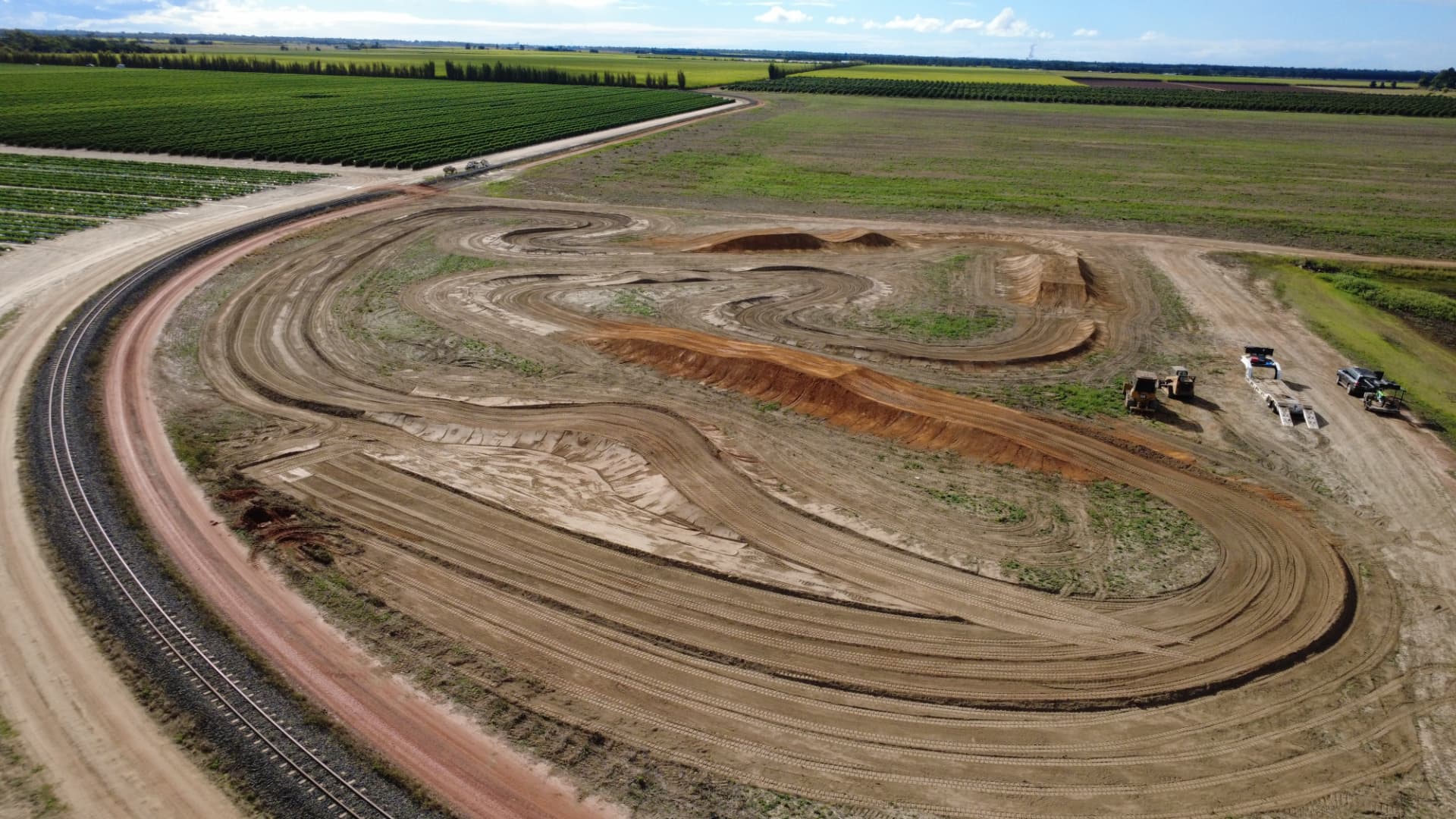
Our Build Principles
Your own track. More of your land left intact.
A great track starts with understanding the ground. Adam's decades of machinery experience guide where we cut, where we move material and where we leave your property alone. Our aim is to build the track you want while keeping disturbance to the surrounding land to a minimum.
How we build
Six principles behind every track
01
Read the land before moving it
Every layout is shaped around the property: its contours, the material available, the space you have, how the track will be used and who will ride it.
Existing terrain can often become part of the track's features and flow. We assess each property on its own rather than dropping in a standard layout.
02
Selective earthworks
Cut-and-fill in plain terms: we cut suitable material from selected areas and move it to form the track's features.
Adam's experience helps him pick where material can be sourced and used well, while limiting unnecessary disturbance across the wider paddock.
The construction footprint covers the track surface, the material-source areas, machinery access and any drainage works.
03 — Preserve existing grass wherever possible
Build the track. Keep the paddock.
Our earthworks focus on the areas the build actually needs. Surrounding grass is kept wherever conditions allow — we aim to avoid stripping the whole usable area just to form the track.
Keeping established grass helps the finished track sit naturally within your property.
04 — Reduce the ground that needs restoring
Less to reseed. Less to bring back.
Every square metre of grass left in place is ground you don't need to reseed, water and nurse back after construction.
Retaining established grass can reduce reseeding and restoration costs. How much depends on your site, the layout and the conditions on the day.
05
Consider drainage alongside the layout
Slope, soil and the way water moves across the site all inform the build. Necessary drainage and erosion-control works are part of the construction footprint.
Minimal disturbance never means skipping essential ground preparation, compaction, drainage or safety work.
06
Build for the people riding it
Rider ability, bike sizes, intended use and how features progress all shape the layout.
Tracks are assessed and, where conditions and scope allow, test-ridden and refined. Test-riding is not a formal competition approval.
General building-site guidance
Why we aim to minimise land disturbance
The Australian Government's Your Home guidance encourages builders to limit unnecessary excavation and vegetation removal, keep clearing within the work area and retain existing ground cover where feasible.
These are general construction principles for building sites, not a motocross construction standard. They line up with our own aim of limiting avoidable disturbance. They are not an endorsement, certification or proof of compliance.
From the build
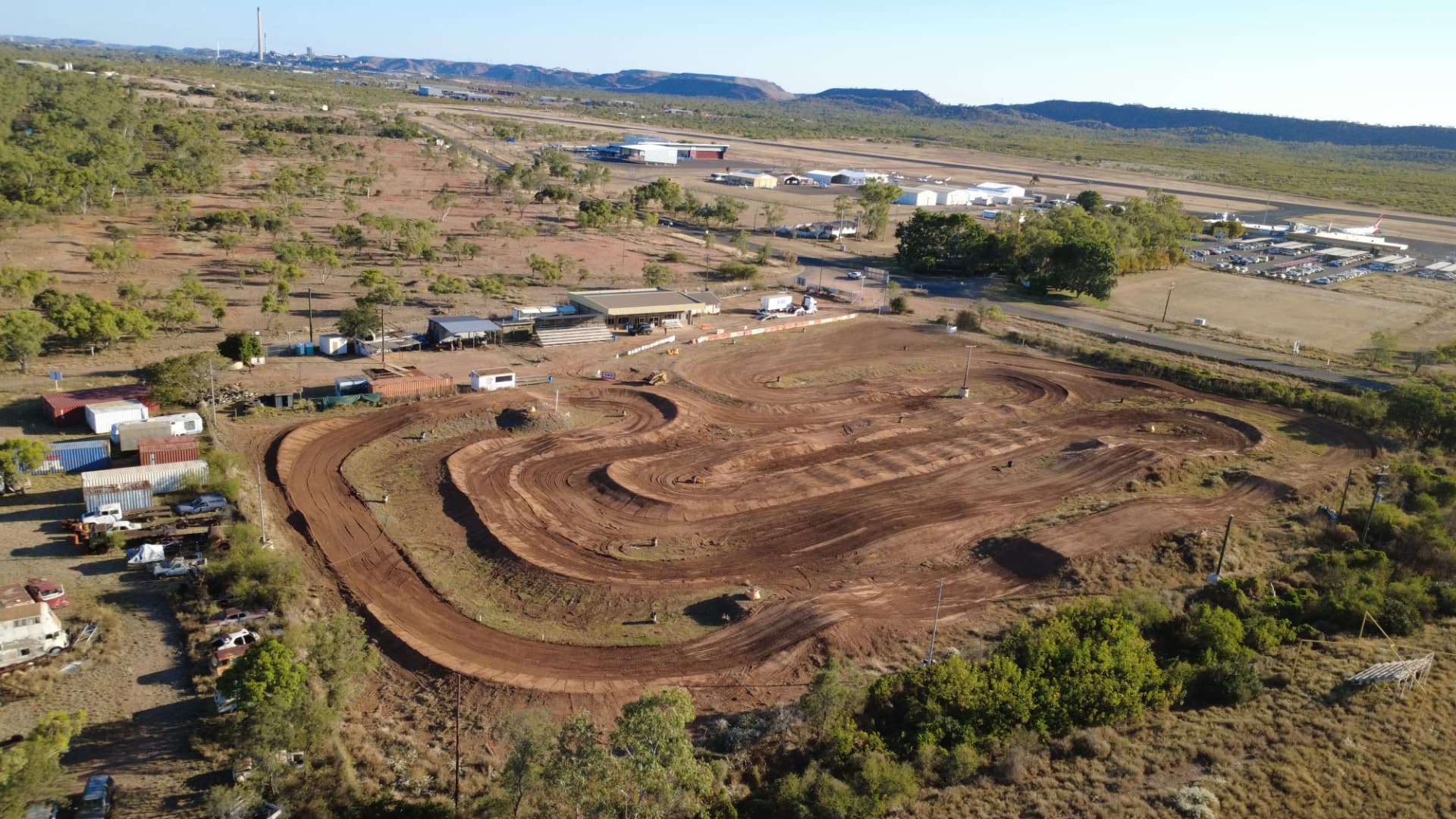
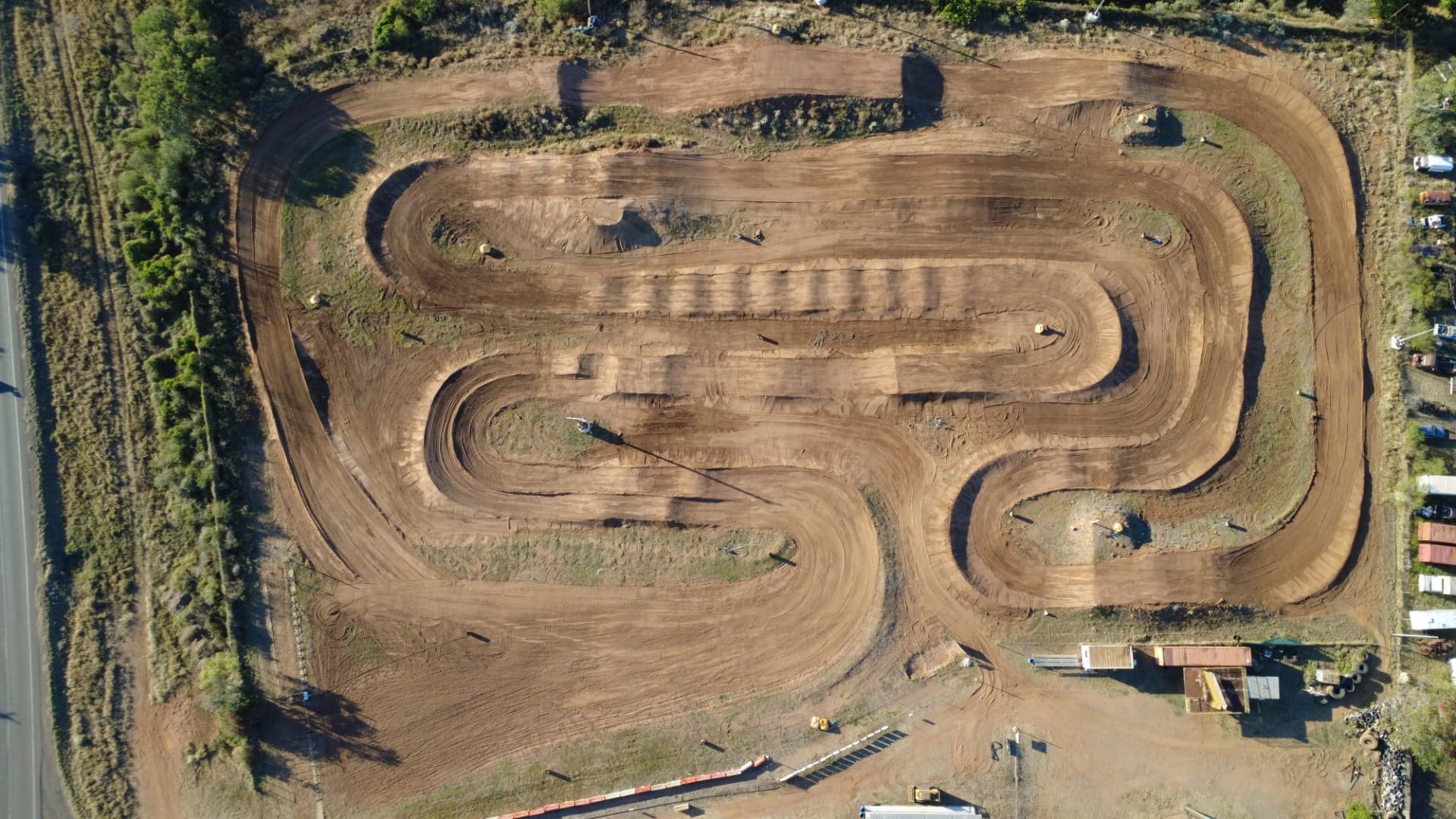
Mount Isa Motocross Club rebuild
Tell us about your ground.
Send your location, some photos or video of the property and what you want to ride. We'll look at how a track could fit your land.