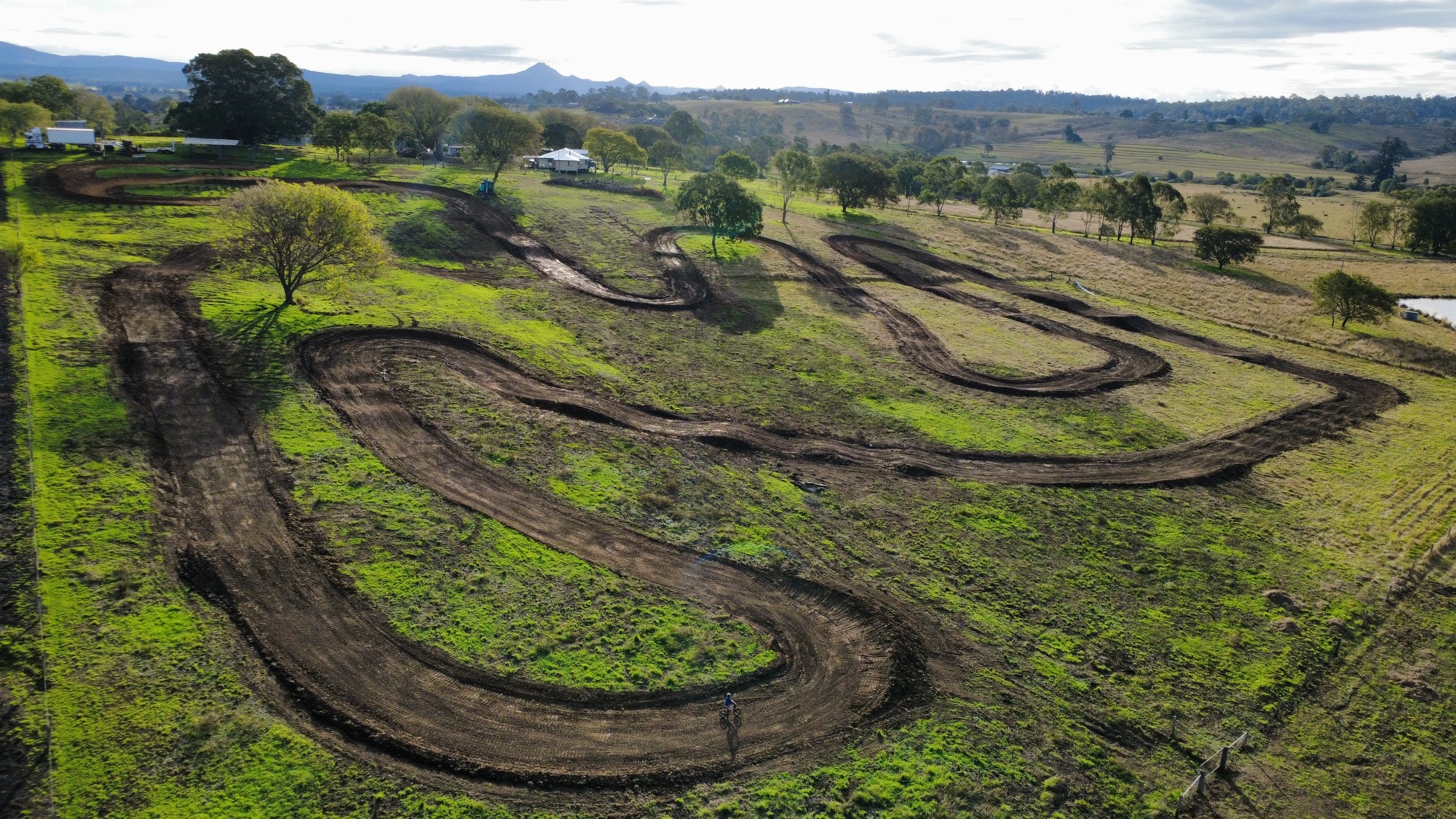
Full Throttle Flow
What Makes A Motocross Track Flow?
Flow is a riding decision before it's a dirt decision
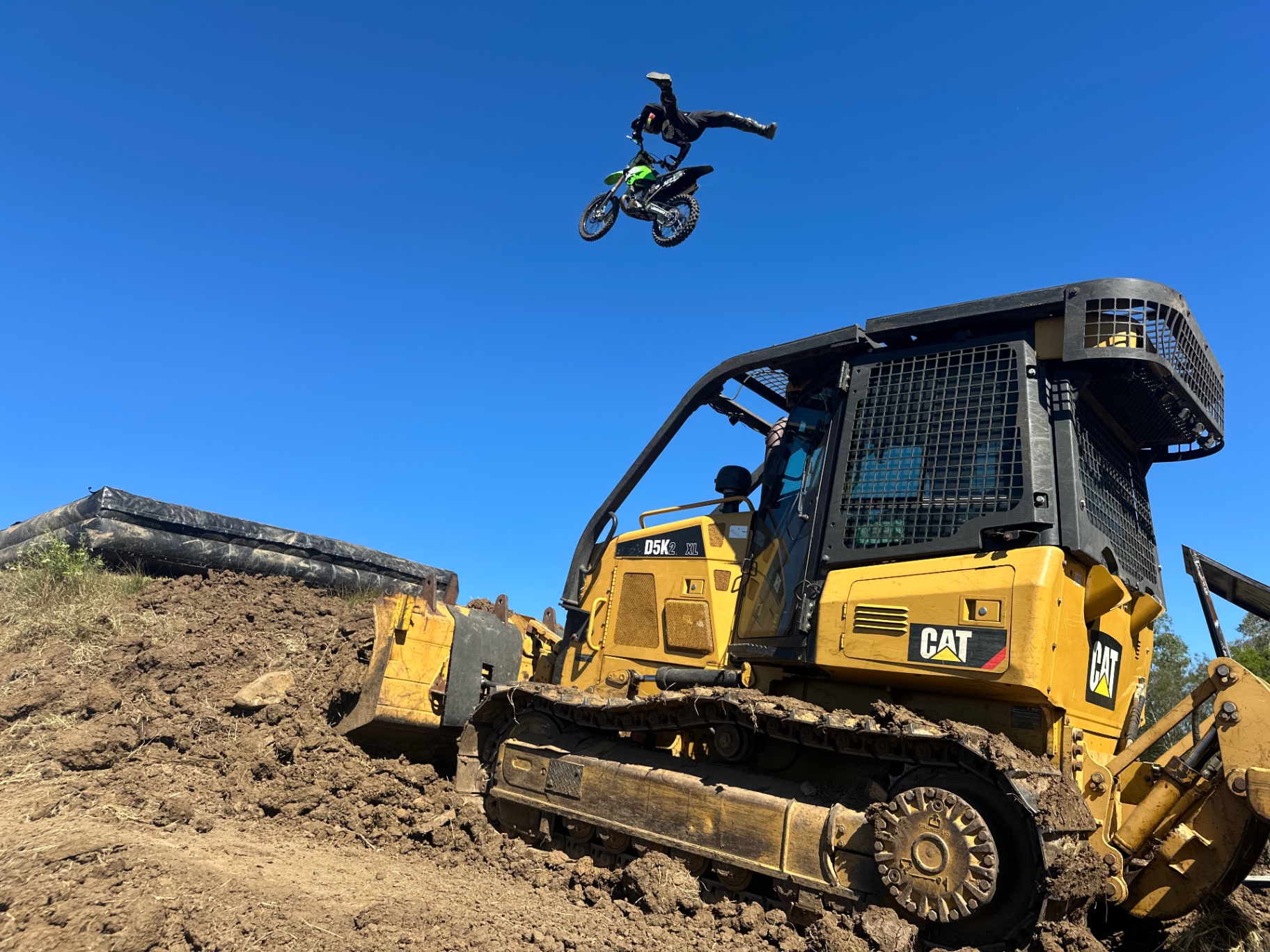
Ask ten riders what flow is and you'll get ten answers. Ask them to point at a track that has it and they all point at the same one. Flow is the difference between a track you ride for twenty minutes and a track you can't walk away from.
It isn't decoration and it isn't the number of jumps. Flow is rhythm — every corner setting up the next thing, and the whole lap making sense at the speed you actually ride.
Flow starts with the exit, not the entry
Most tracks that don't work were laid out entry-first. Someone picked a nice spot for a corner, then worked out afterwards where riders would end up. Ride it and you feel the punishment: you exit pointing at nothing, so you sit up, roll, and reset.
The way we look at it, a corner exists to launch you at whatever is next. That's why Adam designs from the seat as much as the machine — you have to know where you want to be when you come off the berm before you decide where the berm goes.
Speed has to be earned and given back
A lap that only ever accelerates gets dangerous, and a lap that only ever slows down gets boring. The good ones breathe: build speed, use it, hand some back through a technical section, build it again.
- Where does the lap take a breath, and is that on purpose?
- Can a slower rider hold a clean line without being in the way of a fast one?
- Is there a section that rewards commitment, and one that rewards technique?
- Does the track still make sense two-up, or only on a hot lap?
The dirt decides how much flow you keep
Flow that only exists on day one isn't flow. Soil, moisture and how water leaves the site decide whether the shapes you cut are still there in six months. A layout that ignores fall will rut where you don't want ruts and go slick where you need grip.
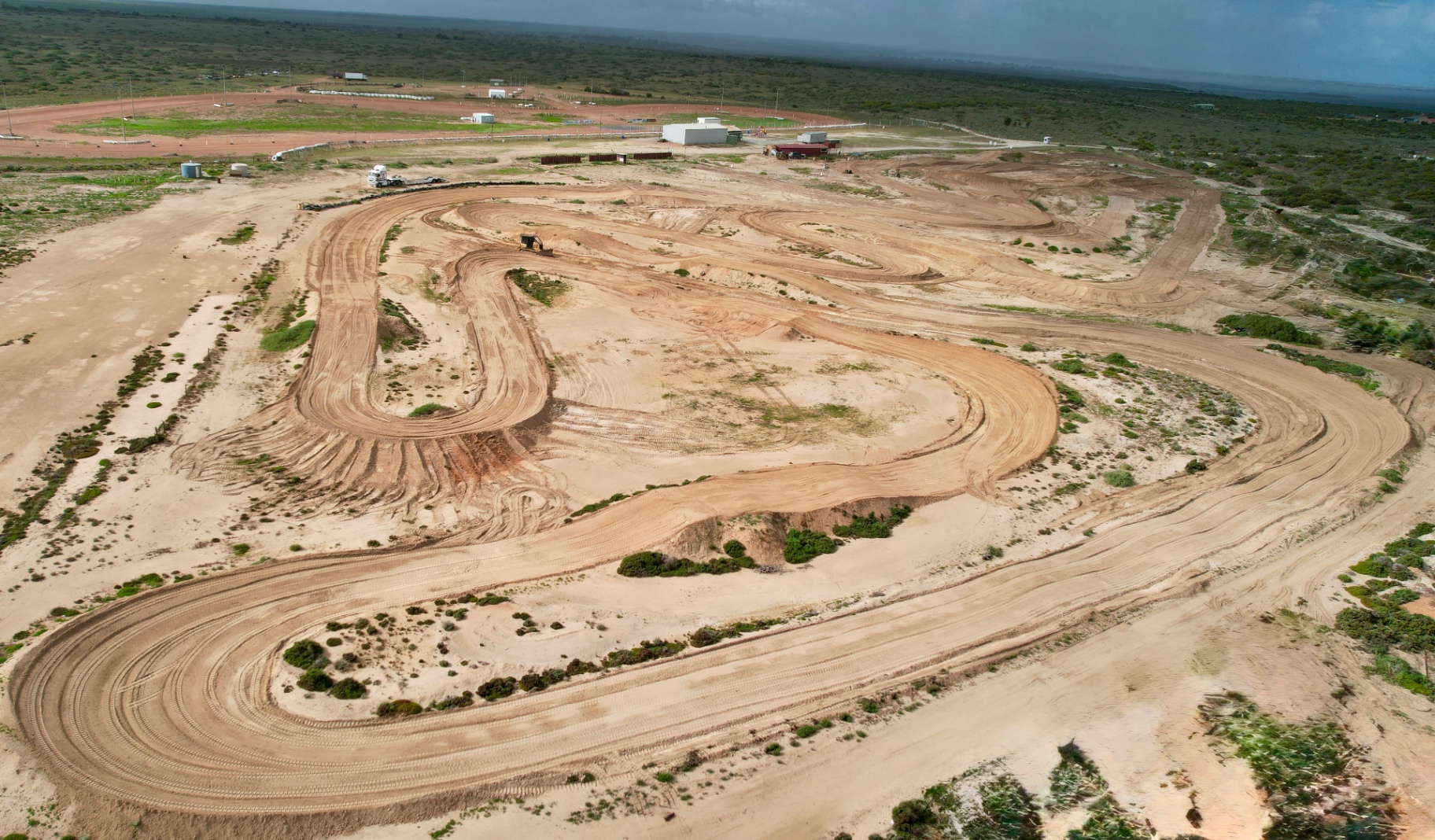
That's why the same layout doesn't get reused on a different property. Red clay in outback Queensland and sand in coastal country behave nothing alike, and the rhythm has to suit what the ground will hold.
Riders, not just bikes
A flowing track for a 50cc kid, an intermediate on a 250F and a fit bloke on a 450 aren't automatically the same track — but they can be, if the layout is built with lines that overlap instead of options bolted on later. That's the hard part, and it's the part worth paying for.
If you're weighing up a build, the fastest way to get a straight answer is to tell us where you are, who's riding and what the land looks like.
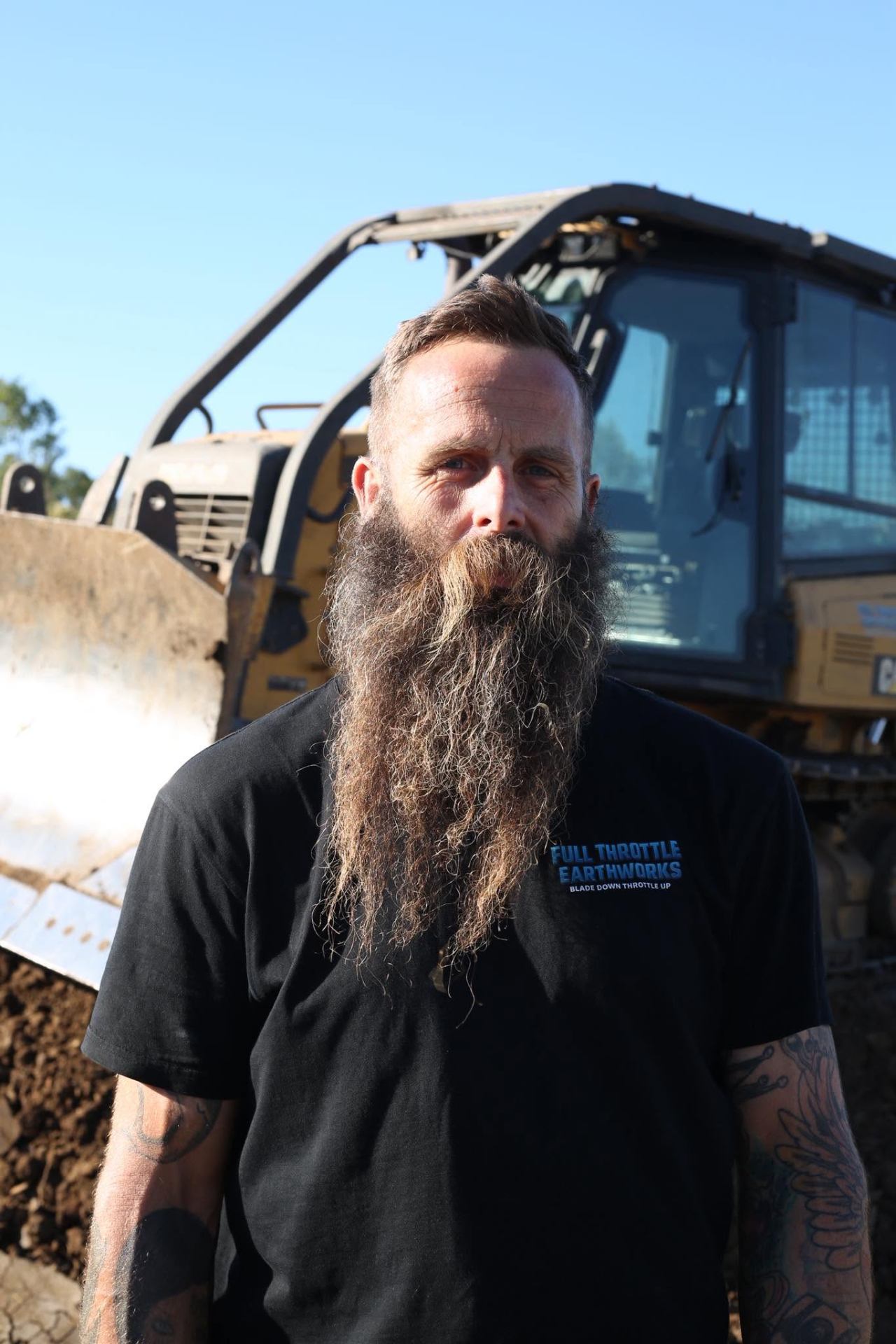
Co-Founder & Lead Operator
Adam Thurrowgood
Adam has spent 25+ years behind the controls and the handlebars. He designs every Full Throttle Earthworks track himself, from the rider's seat as much as the operator's — around the land, the bikes and the people riding them.
No templates and no copy-paste layouts. If a section doesn't feel right on the bike, it doesn't stay in the ground.
He writes about track building, flow, terrain and what actually changes when you ride what you build.