Drainage
Building For Australian Rain, Not Perfect Days
Most tracks fail at the same three points after a downpour
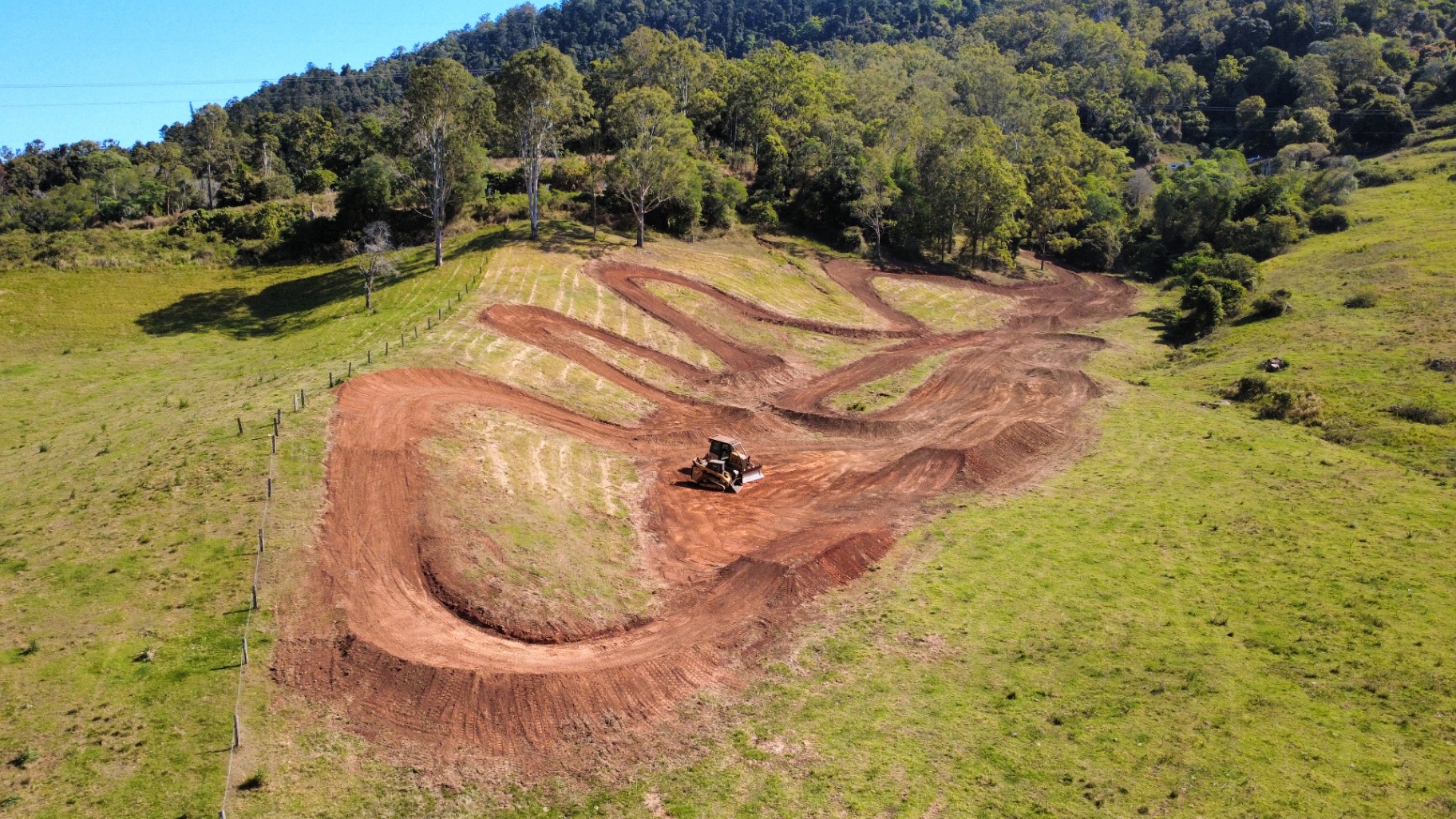
Australian rain does not arrive politely. A track that drains well is not a luxury here — it is the difference between riding next weekend and rebuilding next month.
The three failure points
- Flat sections with no crown, where water sits and turns the base to soup
- Corner exits that collect run-off from the section above them
- Low points with nowhere to send water once they fill
Fix it with shape, not pipes
Most tracks need controlled fall and a diversion cut behind the racing line, not drainage infrastructure. Move the water before it ever reaches the track and the surface looks after itself.
Then maintain to match
After rain, rip and reshape while the moisture is still in the ground. Riding it slick and then working it dry costs a club far more machinery hours than doing it in the right order.

Co-Founder & Lead Operator
Adam Thurrowgood
Adam has spent 25+ years behind the controls and the handlebars. He designs every Full Throttle Earthworks track himself, from the rider's seat as much as the operator's — around the land, the bikes and the people riding them.
No templates and no copy-paste layouts. If a section doesn't feel right on the bike, it doesn't stay in the ground.
He writes about track building, flow, terrain and what actually changes when you ride what you build.