Private tracks
How Much Land Do You Need For A Private Motocross Track?
There's no single number — and anyone who gives you one hasn't seen your dirt
This is the first question nearly everyone asks, and we get why. It's also the one we can't answer honestly over the phone without knowing anything about your block.
We've seen big flat paddocks that give you less than you'd think, and awkward-looking country with fall and features that turned into something riders talk about for years. Area is only one number in the equation.
Shape beats size
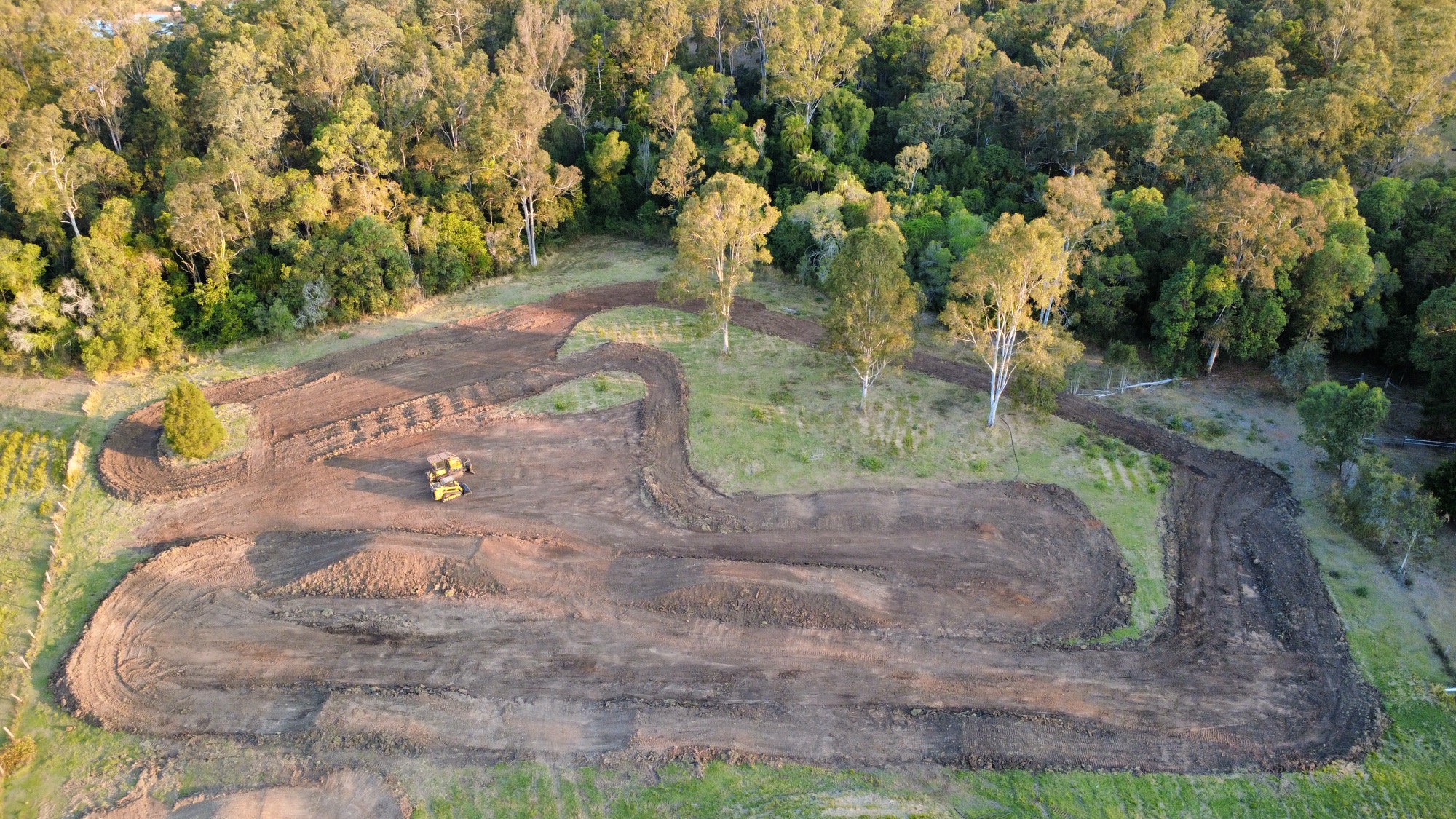
A long, narrow strip and a square block of the same size do not build the same track. Corners need room to be corners, and the useable area is whatever's left after setbacks, sheds, dams, tree lines, easements and the bits you don't want touched.
Fall is free speed
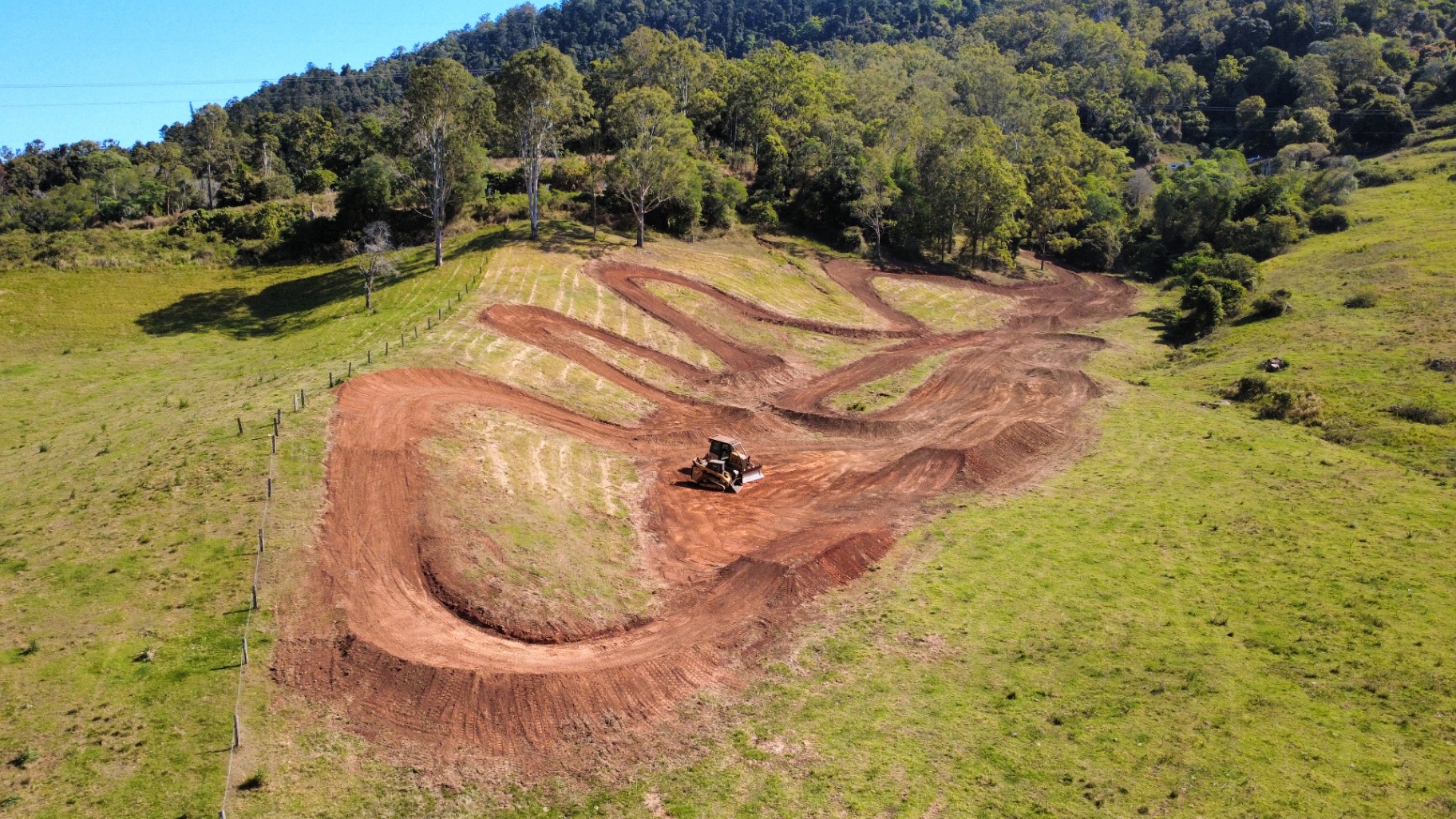
Natural slope is the most valuable thing a property can hand you. It gives you elevation change without importing dirt, and it gives water somewhere to go. Dead-flat ground can absolutely work — it just means the layout has to earn its interest a different way.
What we look at instead of acreage
- Useable area once boundaries, buildings, dams and vegetation are off the table
- Fall across the site and where water naturally wants to run
- Soil type and how it behaves wet and dry
- Who's riding — 50s, juniors, adults, or all of it on the same layout
- How the track will be used: laps, coaching, practice starts, mates over on weekends
- Machine access, and whether material can be moved on site instead of trucked in
- Noise, neighbours and whatever your local council requires
Small blocks aren't out
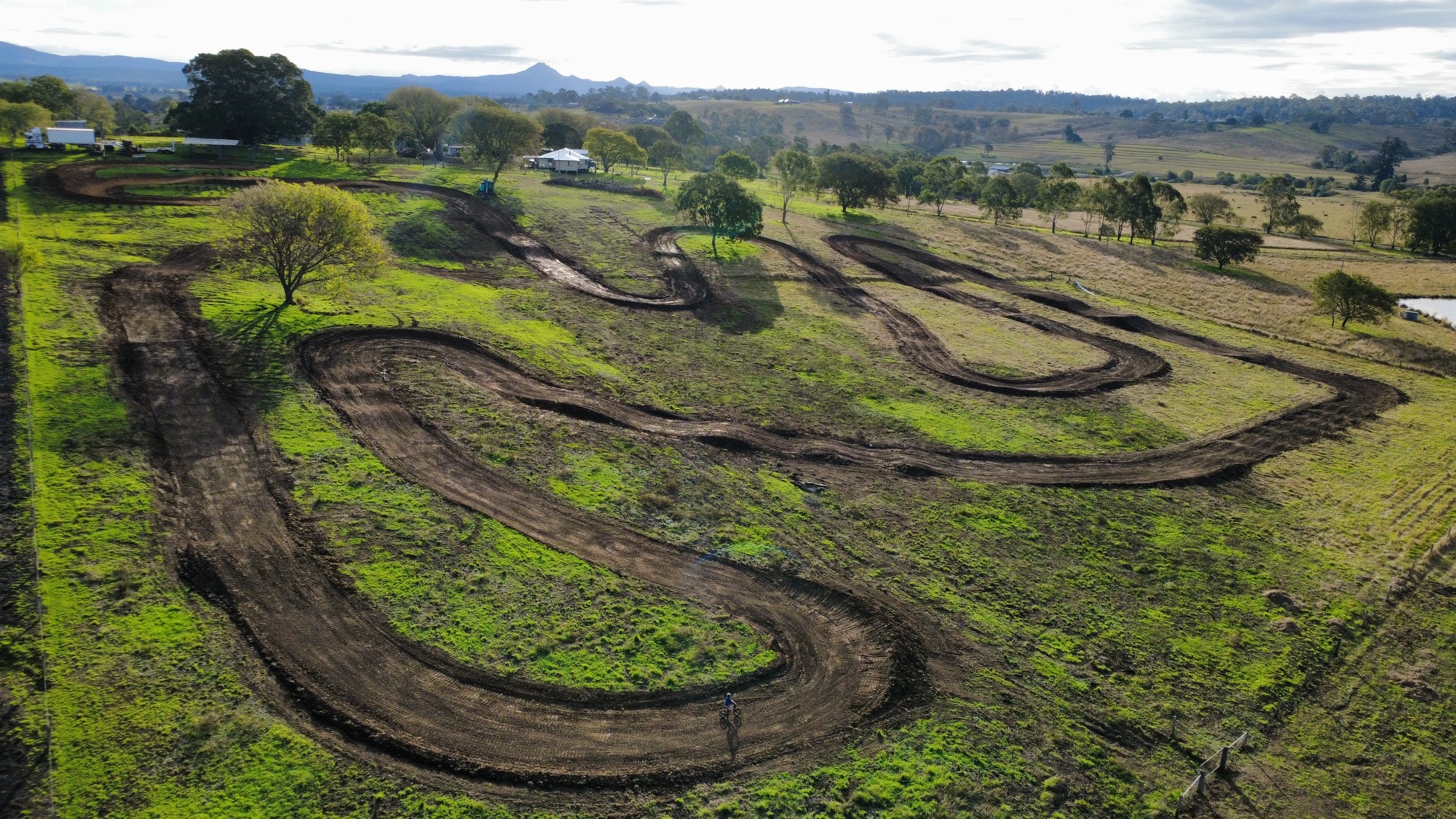
Plenty of family tracks are built on modest acreage, and they work because the layout was drawn for that space instead of squeezed into it. Shorter laps with tighter, technical riding can be better for juniors learning than a big open circuit anyway.
Where small blocks genuinely struggle is when you want full-size jumps and adult-speed straights on top of everything else. That's a conversation about priorities, not a hard no.
The honest answer
Send us the address or the listing, a rough boundary, and a couple of photos or a drone clip. That's enough for Adam to tell you what the block will realistically support before you spend money on anything.
If you're still looking for land, read what Adam checks before you buy — it's cheaper to choose the right block than to fix the wrong one.
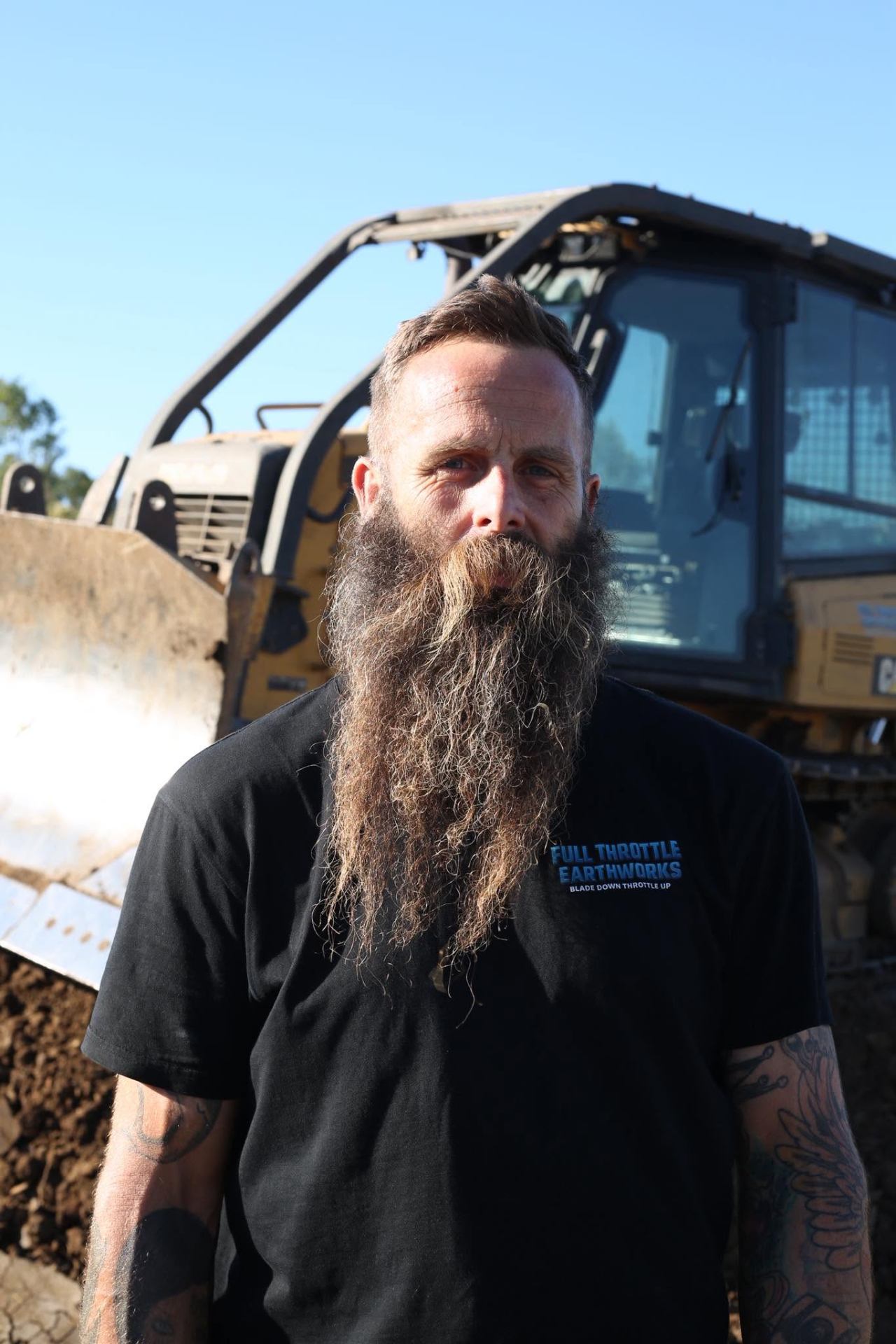
Co-Founder & Lead Operator
Adam Thurrowgood
Adam has spent 25+ years behind the controls and the handlebars. He designs every Full Throttle Earthworks track himself, from the rider's seat as much as the operator's — around the land, the bikes and the people riding them.
No templates and no copy-paste layouts. If a section doesn't feel right on the bike, it doesn't stay in the ground.
He writes about track building, flow, terrain and what actually changes when you ride what you build.