Hard enduro & enduro
Hard Enduro: Building With What The Country Already Gave You
The best sections are found, then made rideable
You don't manufacture hard enduro. You find it. The rocks, roots, gullies and climbs that make a section worth riding are already there — the work is in reading which ones are useable and how they link together.
Walk it before anything moves
On enduro country the walk is the design. Where a machine can safely go, where a rider can commit, what happens when that gully runs with water, which climb has a bail-out and which one traps you halfway up.
Grading difficulty honestly
A loop that's only rideable by the fastest bloke in the group gets used once. Good enduro properties have an honest grade: a loop that flows for most riders, with harder sections that can be taken or left without ruining the lap.
- A main loop most of the group can complete without stopping
- Optional technical sections that rejoin cleanly, not dead ends
- Escape routes and somewhere a bike can be recovered from
- Sections that stay rideable in the wet, and sections you accept won't be
- Enough loop length that riders aren't queuing at the hard bit
Leaving the country intact
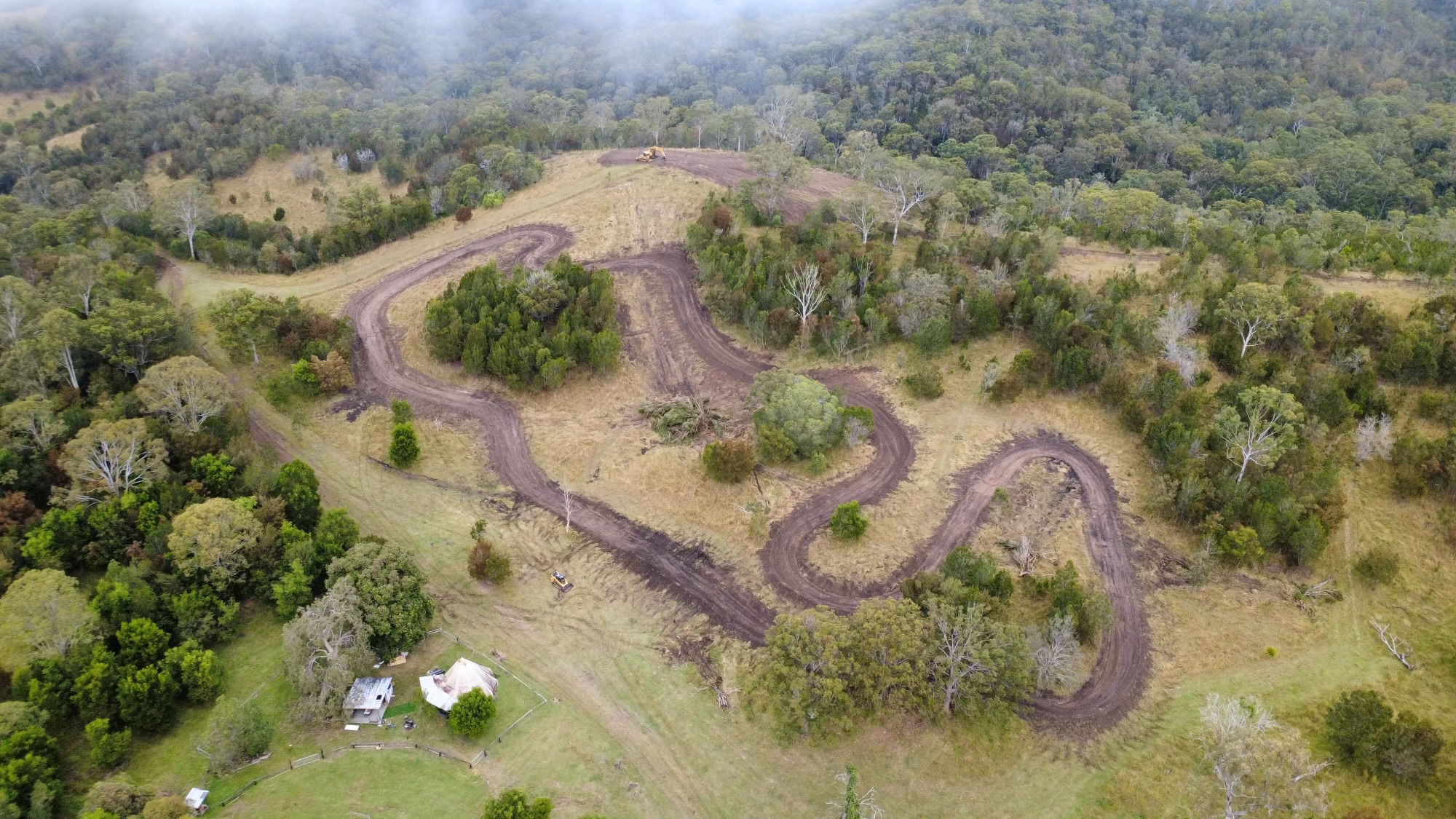
Enduro builds work best when they take the least. Less clearing, less disturbance, more use of what's there. It rides better and it holds up better, because natural ground that's been there for decades doesn't wash away in one storm.
If you've got rocky, timbered or hilly country you think is useless, that's often the best enduro land there is. Send us a look at it.

Co-Founder & Lead Operator
Adam Thurrowgood
Adam has spent 25+ years behind the controls and the handlebars. He designs every Full Throttle Earthworks track himself, from the rider's seat as much as the operator's — around the land, the bikes and the people riding them.
No templates and no copy-paste layouts. If a section doesn't feel right on the bike, it doesn't stay in the ground.
He writes about track building, flow, terrain and what actually changes when you ride what you build.